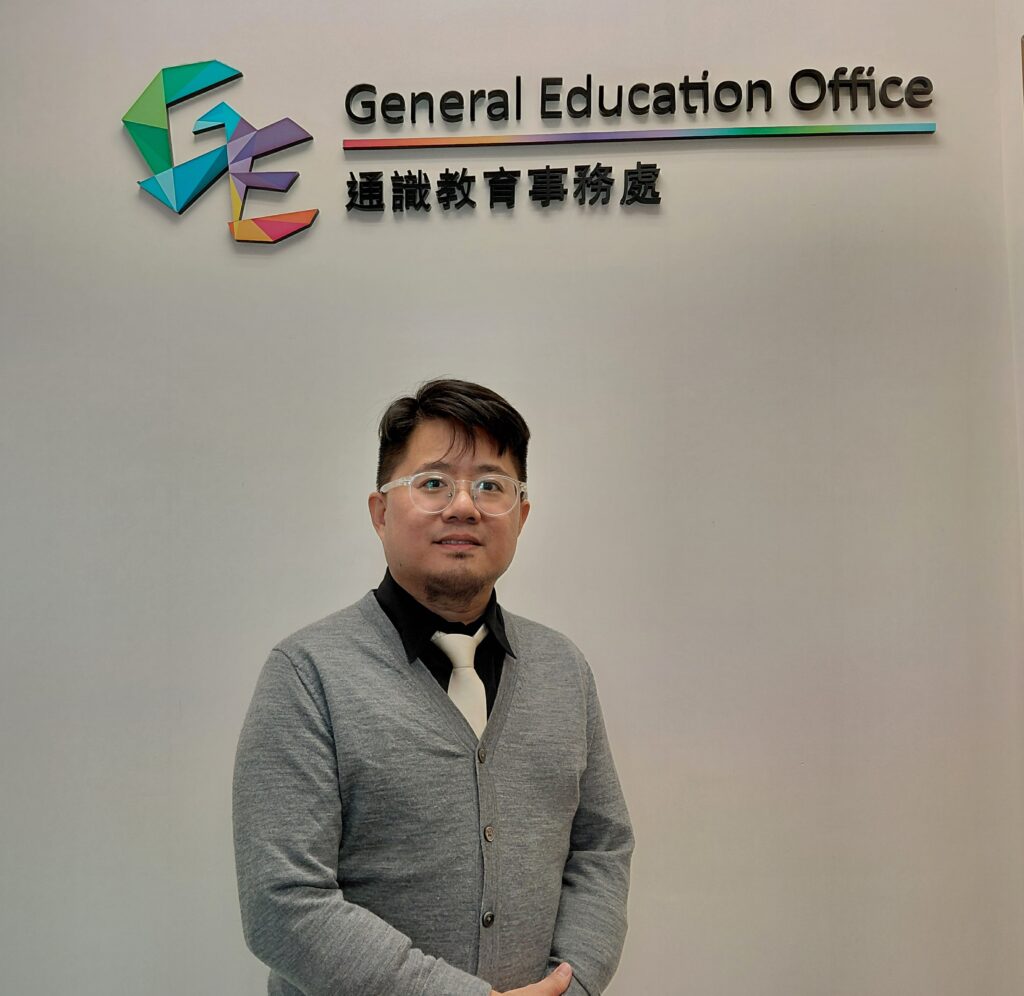
An Interview with Professor David KANG Jong-hyuk, The Education University of Hong Kong (Awardee of UGC Teaching Award, Early Faculty Members, 2018)
A Korean-born History Professor who Teaches Hong Kong History via 4-RE Pedagogy
Professor David Kang Jong-hyuk was born to Korean parents who relocated to Taiwan for missionary work and intellectual pursuits when he was only three months old. Growing up in Taiwan, Kang observed his father—a historian specializing in the History of Christianity in Modern China—immersed in centuries-old archival documents. His own intellectual awakening occurred in high school when a history teacher challenged students to analyse excerpts from the U.S. Declaration of Independence. Captivated by the interpretive power of historical inquiry, Kang resolved to dedicate his life to the study of history.
“History plays a crucial role in shaping individual and collective identity. Without an understanding of the past, people lack a clear sense of who they are,” he remarked. His academic journey began with undergraduate studies at the University of Illinois Urbana-Champaign, followed by a Master’s degree at Columbia University, and culminated in a PhD at the Chinese University of Hong Kong. Influenced by his father and esteemed professors, he investigated the impact of early missionaries on Chinese society. His doctoral dissertation, completed in 2013, represents the first scholarly study on the History of Nursing in Hong Kong—a practice introduced by these early missionaries.
Although linguistic and cultural challenges marked his childhood in Taiwan, Kang has since become a multilingual scholar. Today, he teaches and conducts research in fluent Cantonese, Mandarin, English, and Korean, with a focus on the History of Hong Kong, Modern China, and History Education.
4-RE Pedagogy
“Why is history important? This is a question I pose to students in the first session and revisit throughout the programme,” Kang explained. “If they fail to reflect on this question, they will struggle to inspire their own students in the future.”
“To teach history effectively, one must cultivate historical empathy and truly ‘feel’ the past.” Kang serves as an Assistant Professor in the Department of Literature and Cultural Studies and is also the Director of General Education.
Kang has developed a learner-centred instructional framework known as the 4-RE Pedagogy. The first stage, Reconstruct, employs visualization techniques—such as historical documents and photographs—to stimulate students’ historical imagination and foster empathy for past experiences. The second stage, Reread, encourages students to revisit texts after reconstruction, enabling them to engage with the perspectives of various historical figures rather than merely extracting information. The third stage, Reflect, involves writing exercises in which students articulate the emotions they experience throughout the process, creating a more holistic learning experience. Finally, the fourth stage, Research, requires students to locate primary sources and undertake small-scale research projects, thereby reinforcing active inquiry and critical analysis.
To examine the 1894 plague in Hong Kong, for example, Kang employs experiential and visual learning strategies. He presents students with historical images depicting afflicted individuals and British soldiers escorting local residents to quarantine facilities, enabling them to imagine the pervasive fear of the era. Beyond classroom instruction, Kang organizes site visits to Sheung Wan, where students visualize historical locations associated with water collection, housing reconstruction, and hospital development. Additionally, he leads community trips to Mei Ho House in Sham Shui Po—Hong Kong’s first public housing estate—so that students can engage with the lived experiences of refugees during the 1950s.
“When individuals truly feel history, they become more inclined to learn,” Kang observed. He recalled a class on the Nanjing Massacre that moved several students to tears. “However, I emphasized that their reflections should be constructive, fostering understanding rather than perpetuating hatred.”
Kang credits poet and educator Dr Wong Leung Wo for inspiring his pedagogical approach. Wong advocates for collaborative exploration of literary texts, encouraging students to seek answers through dialogue rather than relying on direct instruction.
Making History Relevant
“History is not solely about kings and emperors; what about the countless ordinary individuals? They, too, are significant. Oral history and family narratives deserve exploration,” Kang emphasized. To this end, he encourages students to interview parents, grandparents, or elderly members of their communities to learn about their life experiences and responses to historical circumstances. “History is not merely a collection of cold, hard facts—it is something to be felt, and it has the power to warm hearts.”
Kang integrates popular culture into his teaching of history, using Canto-pop from the 1960s to 1980s as a lens to illustrate social attitudes and cultural dynamics of the era. Conversely, he employs historical analysis to contextualize pop culture phenomena, drawing parallels between the Canto-pop craze in Korea during the 1980s and the contemporary popularity of K-pop in Hong Kong. “Songs by Leslie Cheung and films such as A Better Tomorrow (英雄本色) were immensely popular in Korea,” he noted, casually referring to Chow Yun-fat by his Cantonese nickname, “Brother Fat,” to underscore the transnational cultural exchange.
While some perceive Hong Kong’s history as marginal, Kang strongly disagrees. “Importance is subjective; if you believe it matters, then demonstrate its significance, give it meaning, and act upon it,” he asserted. For Kang, Hong Kong possesses a distinctive historical trajectory that should neither be overlooked nor forgotten, as neglecting it risks leaving those born here without a sense of identity. “Hong Kong is not separate from mainland China, yet its history has unique characteristics that merit serious scholarly attention.”
To engage primary school students in learning Chinese history, Kang has played a pivotal role in the development of Animated Chinese History for Curious Minds at EdUHK. This initiative features a series of five-to-seven-minute animated episodes that introduce significant historical figures, ranging from the philosopher Zhuang Zi (莊子) and the strategist Zhuge Liang (諸葛亮) of the Three Kingdoms period to Sun Yat-sen (孫中山), the founding father of the Republic of China.
Among the featured figures, Kang takes particular pride in his inclusion of modern female writer Bing Xin (冰心). “As a gender historian, I find Bing Xin remarkable, partly because of her Western education. I want my students to recognize the significance of her presence in history,” he explained, underscoring her role in shaping modern Chinese literary and cultural discourse.
Caring Teacher
Kang emphasizes that the most essential quality of an educator is “teaching by example 身教.” He explained, “What truly matters is how teachers communicate, interact, build relationships, and inspire their students.”
Among the numerous accolades Kang has received—including the Faculty of Humanities Teaching Award (2017), the President’s Award for Outstanding Performance in Teaching (2018), and the UGC Teaching Award (2018)—the recognition most meaningful to him is the Caring Teacher Commendation under EdUHK’s scheme (2023). “It was not a major award, but it mattered because the nomination came from my students, affirming that my efforts to care for them were truly recognized,” he reflected.
“Students are always welcome to return after graduation; I often joke that we offer ‘after-sales service,’” Kang remarked with a smile. “What is most rewarding is knowing that our work can have a lifelong impact on students and, ultimately, on the broader community.”
Kang expresses concern that many universities increasingly prioritize research over teaching and learning, driven by institutional rankings and promotion criteria that heavily emphasize publications. “I have tried to maintain my focus on teaching. If I were to devote my entire attention to research, the quality of my teaching would inevitably suffer. This is a difficult question,” he reflected. When asked whether universities should strive for a balance between research and teaching, his response was unequivocal.
Visions for the future
Kang hopes to challenge the prevailing perception that history is both boring and irrelevant. He observes that Hong Kong’s examination-oriented culture often constrains history teachers from experimenting with innovative pedagogies. Nevertheless, he acknowledges that the current system does allow students some space to develop their thinking skills. For young people passionate about pursuing history, Kang offers a rigorous yet straightforward piece of advice: read extensively—ideally, one book per week.
As both a Christian and a historian, Kang views his faith and intellectual pursuits as united by a common goal—the search for truth. He regards his spiritual convictions as the foundation of all his endeavours, including his teaching and academic pursuits. In informal settings, he occasionally shares with students his belief in God’s love, reflecting the integration of his values with his educational philosophy.
Kang and his local wife are raising three young children who attend local schools. “I want my students to have confidence in the local education system; otherwise, I would be a hypocrite,” he remarked, underscoring his commitment to aligning personal choices with professional values.